
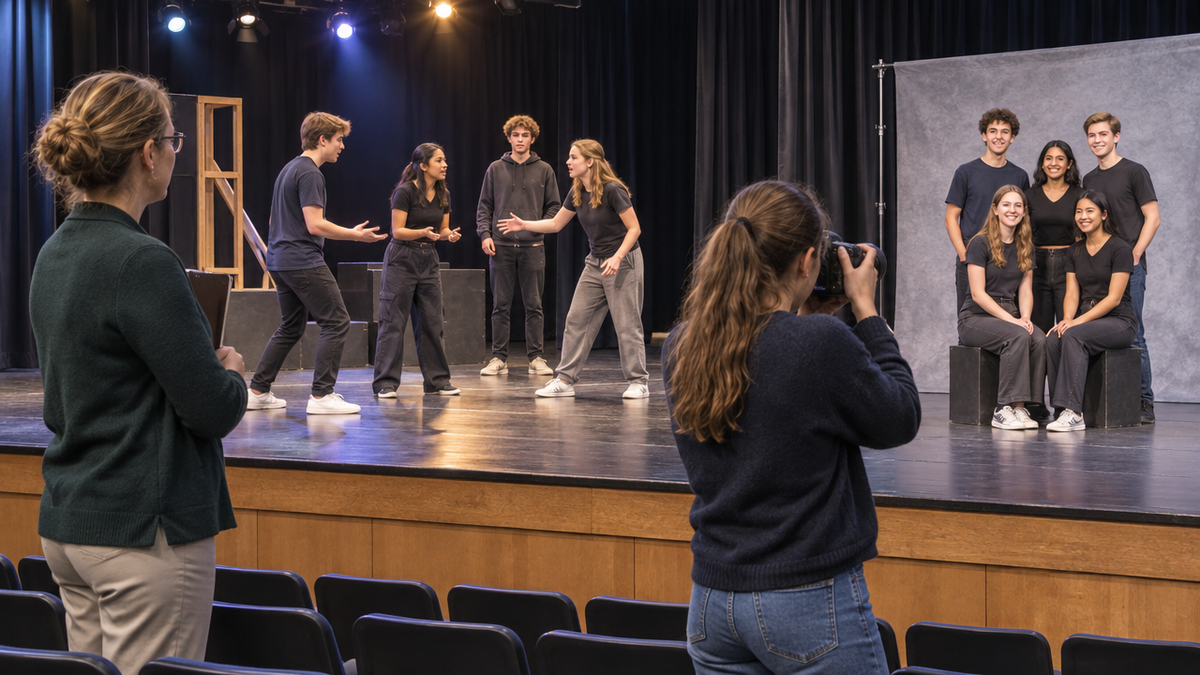
Dance, theater, and music programs each tell a story in a different way. A rehearsal may show preparation and creative development. A performance may document the finished production. Cast or ensemble portraits may provide a clear record of the students and adults who made the program possible. Because these goals are different, school performing arts photography coverage should begin with the school’s intended use, not simply with a request for “event photos.”
Before discussing a practical plan, identify what the images need to accomplish, which participants must appear, where photography may take place, and how the finished images may be used. This preparation helps administrators compare coverage options clearly and communicate expectations with directors, production staff, families, and the photographer.
Start with the purpose of the images
The same production can need several kinds of photography. A school may want images for an internal archive, a printed program, a yearbook, approved publicity, family keepsakes, or recognition of the full group. One type of session may not satisfy every purpose.
Write down the intended uses before selecting coverage. For example, a program may need a formal group portrait and a few approved production images. A yearbook may benefit from a mixture of ensemble portraits and scenes that show the students’ work. An archive may call for broader documentation of costumes, sets, choreography, staging, and the people working behind the scenes.
This list also creates a useful boundary. An image that works well as an internal record may not be appropriate for public promotion, and a work-in-progress rehearsal image may not represent the finished production. Treat publicity, archival documentation, program materials, and family purchases as separate decisions.
When rehearsal coverage makes sense
Rehearsal photography is useful when the school wants to show preparation, movement, and the process behind a production. Depending on the program, that may include dance choreography, staging, costume fittings, props, set construction, musical preparation, or the collaboration between performers and directors.
Rehearsal images can bring attention to effort that an audience may never see. They may show students learning a sequence, refining a scene, practicing with props, or working together as an ensemble. These photographs can be especially valuable for an arts department archive or a story about the educational process.
However, administrators should decide whether rehearsal images are private, internal, archival, or approved for publicity. Early material may include unfinished costumes, incomplete sets, notes, or scenes that the director does not want shared before opening night. Ask the director or production lead which activities may be photographed and which should remain off limits.
Rehearsal access should also be scheduled carefully. A photographer’s presence should not interfere with instruction, concentration, movement, or technical work. Establish where the photographer may stand, when photography may occur, and whether certain parts of the rehearsal require a pause or separate arrangement.
When performance coverage is the better fit
Performance coverage is the natural choice when the school wants to document the finished production as an audience experiences it. The completed set, costumes, lighting design, staging, choreography, musical performance, and storytelling can all contribute to the final visual record.
A finished production may be important to the school’s history, arts department, students, and families. It can also provide approved images for post-production communication, subject to the school’s policies and any applicable production rights. The key question is whether the school needs photographs of the completed work rather than photographs of the process.
Do not assume that a public performance is automatically the right photography opportunity. A scheduled photo call or dress rehearsal may provide more control over timing and access, while a live performance may impose restrictions related to audience experience, stage access, lighting changes, or the production’s agreements. Discuss these choices with the director and production manager before selecting a date.
Performance conditions can vary widely. A school should share the venue, stage layout, seating arrangement, available light, lighting cues, photographer locations, and any restrictions on movement. No two theaters, auditoriums, studios, or concert spaces operate in exactly the same way, so the coverage plan should reflect the actual location rather than rely on a standard assumption.
When cast or ensemble portraits are essential
Cast and ensemble portraits serve a different purpose from action coverage. They provide a dependable record of who participated and can be used for programs, yearbooks, department archives, recognition, or family keepsakes, depending on the school’s plans and permissions.
Define the groups before the session. A theater program may need the full cast, cast and crew, directors, separate casts, or production teams. A music program may need choir, orchestra, band, chamber groups, and section portraits. A dance program may need the complete company, individual classes, and smaller ensembles.
Make a participant list and decide whether adults should appear. Include directors, instructors, conductors, choreographers, accompanists, stage managers, crew members, and other contributors when appropriate. The Tennessee Performing Arts Center, for example, calls for a high-resolution group photograph that includes cast and crew in its school participation guidance. Planning the participant scope in advance reduces the chance that an important group is overlooked.
Portraits also require practical decisions about clothing, props, formations, timing, and location. A clean group arrangement may be best for a formal program image, while a more expressive pose may suit a dance or theater keepsake. The school should communicate the desired tone without asking the photographer to guess which people or groups matter most.
Match the coverage to the discipline
Dance, theater, and music programs should not be planned with identical shot lists.
- Dance: Prioritize movement, formations, physical expression, group relationships, costumes, and the shape of choreography. Identify whether the school wants rehearsal development, finished stage moments, portraits, or all three.
- Theater: Consider scenes, character relationships, costumes, set design, props, directing choices, and the complete cast. Clarify whether crew and production staff need to be included in formal portraits.
- Music: Identify each ensemble, conductor or director, instruments, seating arrangement, and performance setting. Decide whether the goal is a formal group record, performance storytelling, individual recognition, or a combination.
These are planning priorities rather than universal rules. The director’s goals, the age of the students, the production schedule, and the intended use should guide the final list.
Confirm access, privacy, and approved uses
Assign one school contact who can coordinate with the director, stage manager, production lead, and photographer. That person should confirm the schedule, approved locations, participant groups, and permitted uses. Backstage areas, dressing rooms, and private preparation spaces should never be treated as automatically available for photography.
Ask whether any choreography, scenes, costumes, or student activities require special limits. Sensitive material may need to be excluded from photography altogether. Written permissions, school policies, participant expectations, and production licensing terms should be reviewed before images are posted online, shared on social media, placed in promotional materials, or offered for sale.
It is also helpful to prepare a short use list that answers four questions: Who may see the images? Where may they appear? When may they be released? Who gives final approval? Clear answers protect students and help prevent an image intended for an internal archive from being distributed more broadly than planned.
Build a practical coverage brief
Before contacting a photography company, gather the details that affect the conversation:
- Program type, production title, and performance or rehearsal dates
- Desired purpose, such as archive, program, yearbook, publicity, or family keepsakes
- Required participant groups, including cast, crew, musicians, directors, and separate ensembles
- Venue address, stage or studio conditions, seating, and available photography positions
- Whether a rehearsal, photo call, dress rehearsal, live performance, or portrait session is being considered
- Areas that are private or restricted, including dressing rooms and backstage spaces
- School policies, participant permissions, production rights, and approval responsibilities
- Preferred deliverables and any deadlines connected to programs, yearbooks, or approved publicity
Once these points are defined, you can have a more useful conversation about what is realistic for the program. At ABC School Photography, we provide school photography services in New York and New Jersey, including dance and acting school photography for recitals, performances, plays, concerts, rehearsals, individual portraits, and group portraits. You can review our dance and acting school photography services while preparing your questions.
The right choice may be rehearsal coverage, finished-production coverage, cast or ensemble portraits, or a combination. When the school defines its purpose, participants, venue conditions, access limits, and intended uses first, it becomes easier to choose coverage that respects the production and gives students’ work the attention it deserves.

